hot
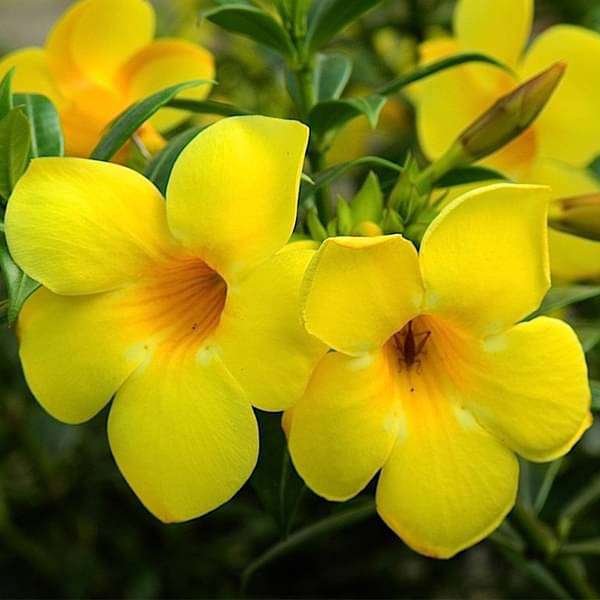
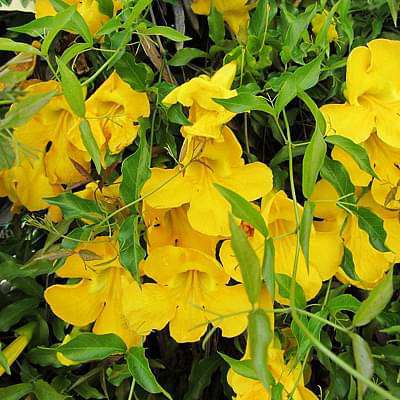
Allamanda Creeper, Pentalinon luteum (Yellow) - Plants
Climbers And Creepers

SKU DUC-716101
This plant is native to the tropical dry forest of Central America, South America and the Caribbean. Dolichandra unguis cati has semipersistent foliage. Stems are woody and can reach 20 meters. Thin and small aerial…
This plant is native to the tropical dry forest of Central America, South America and the Caribbean.
Dolichandra unguis cati has semipersistent foliage. Stems are woody and can reach 20 meters. Thin and small aerial roots are used for climbing. Leaves are dark green, opposite and bifoliate. Leaflets have a length of 3 to 4 cm. The plant produces flowers during the wet season. Flowers are yellow, have a diameter of 4 to 5 cm and can grow alone or in groups of 2 or 3. Long primary roots extend beneath the soil surface, producing large tubers 40 to 50 centimetres long. Fruits are brown flattened capsules from 25 to 95 cm long. Each capsule contains 100 to 200 seeds.
*above specification are indicative only. actual dimensions may vary by +-10%
Plants love water but dont drown them. That is, they dont like to sit in water, and they will die if the soil is too wet in winter. The ideal soil is rich and loose, with good drainage. One of the worst mistakes you can make is to not provide adequate drainage.
plant care may require a bit of effort, but the results are well worth the work. Not all plants are fragrant, but the most common and hardy do produce a sweet, carrying fragrance. Common is a vine and has larger glossy green leaves than Royal. Both can survive in temperate climates if they are planted in a sheltered area.
This plant is native to the tropical dry forest of Central America, South America and the Caribbean. In these natural areas it occurs from sea level to over 600 meters above sea level and where the rainfall is 750 to 2400 mm per year. It can become invasive and it is present worldwide. It can affect all layers of plants of forest ecosystems by rapidly spreading both vertically and horizontally.
Dolichandra Unguis special feature
Cats Claw is a Taoist Tonic Herb, which we consider to be one of the top 20 tonic herbs in the world. It gets it’s name from the hooks that exist on this vine, of which the bark and root are most commonly used.
Dolichandra Unguis uses
Ornamental Use:
The plant is used for ornamental purpose
Medicinal Use:
Cat s claw is a plant
Two species of cat s claw, Uncaria tomentosa and Uncaria guianensis, are of primary interest for use as medicine
Uncaria tomentosa is most commonly used in the U
, and Uncaria guianensis is typically used in Europe
Medicine is made from the root and bark
Prices depend on quantity and delivery location. Add plants to your quote list and send it to us; we will reply with prices and availability. Prefer to talk? Call +91 912 177 3777.
Climbers And Creepers
Climbers And Creepers
Climbers And Creepers
Climbers And Creepers